
Something Essential
A childhood memory of leaving, loss, and quiet becoming.

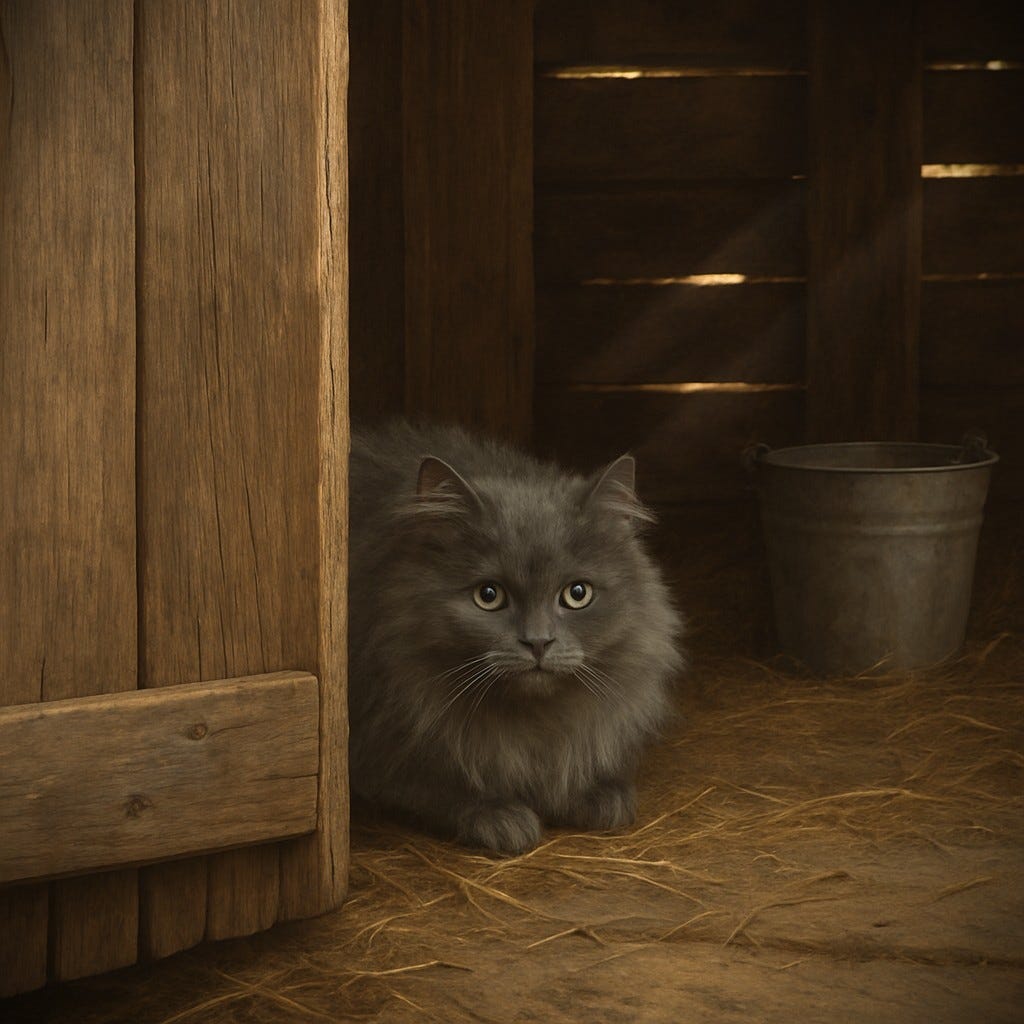
From early childhood, I was a watcher.
An observer. A senser.
For much of my life, I wished I wasn’t. Seeing too much can make belonging harder. But lately, as memory sharpens in unexpected ways, I find myself grateful for that sensitivity. It helps me understand the stories that shaped me — and maybe, by telling them, to understand them differently.
My memories are vivid, detailed, alive within me. They’re stories that have always wanted to be told. As the years pass, the pressure to share them grows more urgent and the fear of losing them more real. I don’t know why these tiny fragments seem larger than life now—or why they feel so compelling. Others might tell them differently, in tidy chronological order perhaps.
To me, they are companions—comforting reminders that I am still here after all these years. That I have lived, seen, and witnessed small but significant moments that hold truth beyond the obvious.
I sensed that truth as a child, even if I couldn’t name it. Writing these memories now, the hidden meanings reveal themselves to me. The process is healing. Each story enriches the memory as it seals it more firmly in my soul.
The Summer I Turned Nine
It was the leaving that took something essential from me.
I’ve carried its echo ever since.
One by one, my touchstones were left behind, or left me. My parents’ unexpected decision to uproot the family and move from Maine to New York was my first step into darkness.
Since then, one by one, everyone and everything that mattered to me has left. I’ve tried to be the one who leaves first—sometimes, in anger, I succeed—but most often I’m the one left standing in the void.
At the end of third grade, my whole family—minus my brothers, one away at college and the other in the Navy—attended the Blue Birds and Campfire Girls ceremony. Awards were given to my two older sisters, and I was “flying up” to proudly become the Campfire Girl I’d longed to be. At last, I would be in the same league as my sisters. I could hardly wait for next year.
That evening, still dressed in our party dresses and shiny patent leather shoes, my parents called us into their bedroom—an unusual request. It had to be something exciting! Maybe they wanted to relive the evening with us. Carolyn and I climbed onto the bed, sitting cross-legged side by side. Sue, already a teen, leaned against the bedpost, her face set in practiced indifference.
Then came the words that changed everything.
“We’re going to move!” my mother announced brightly. “Your father has a new job in New York.”
Carolyn’s questions came rapid-fire, but my heart sank like a rock to the bottom of a dark pond.
As my mother talked—her voice cheerful, determined—I listened in silence. There would be no more walking to school; we’d ride a bus instead. “How exciting!” she said, trying to lighten the mood. We’d even have a telephone we could dial directly—no more operators saying, Number please.
“But I was going to be a Campfire Girl next year,” I whispered. “And I just found a boyfriend.”
That wasn’t quite true, but I wanted it to be. His name was Frankie, the Elvis Presley of my third-grade class. Every Wednesday when Miss Perry turned on the music, I hoped he’d ask me to dance. So far, he’d only chosen Jean—his cousin.
My mother smiled. “There may not be Campfire Girls there, but I’m sure they’ll have Girl Scouts.”
I barely heard her. I didn’t like green. I preferred the red, white, and blue—the crisp white blouses and the little necktie with the slidy thing.
In the weeks that followed, boxes were packed, and the moving van came. I don’t remember saying goodbye to anyone: not to Joanne, Cindy, Judy, Vicky, or Ann. Not to Frankie. Not to Robin or Piscataquis Street. Not to Mrs. Bovin, or to Mr. Bovin, who once gave me the most beautiful birthday gift a seven-year-old could dream of—a necklace and matching bracelet with my birthstone. The one that ended up in a firepit in our driveway. My father didn’t understand why I stood crying beside the fire. And he didn’t ask.
I didn’t say goodbye to my beautiful woods—the lady slippers, the pretend campsite, the tree I’d just learned to climb, or the maple tree my father and I had tapped for syrup. There were no goodbyes that I remember. No I’ll write, no Please write to me. It was as if we’d vanished into the night.
On the way to the train station, my mother told me my beloved Fluffy had been frightened by the movers and had run away. They’d looked but couldn’t find her. “Wick said he’ll try to find her a home,” Mom said gently.
The crack in my heart widened.
Weeks later, I heard, “Wick found Fluffy and took her to live on a farm. She’ll be happy there.”
But I wasn’t happy. Fluffy and I understood each other. She snuggled beside me when I was lonely, played when no one else would, comforted me when I was sad. I had fed her with a doll’s baby bottle, and she had purred in my arms.
The summer I turned nine, I found myself in a new home, in a new world. My childhood had ended.
And I began the long journey of learning to live with loss.
Reflection
Looking back, I see that this was when the watcher in me took root—part protection, part witness to what my heart could not bear to lose again. That small girl still lives in me, still listens for the silences that follow endings, still hopes for what might be found on the other side of loss.
Have you ever had a moment when life changed without your permission—one that quietly shaped who you became?
Author Note
This essay is part of an ongoing collection of childhood memories that shaped who I became—stories of watching, feeling, and finding meaning in the small moments that never left me.
If it resonates with you, I invite you to subscribe to The Wisdom Within, my weekly letter for women walking the path of transformation, aging, and quiet renewal.
You might also enjoy my companion book, The Wisdom Within: A Companion for the Journey from Transition to Transformation — available as a signed copy through my website or on Amazon
Another of your sharing hits home. Phew. Yes, I remember - age 11 - when my parents divorced and we moved with my mom to another city. Interesting too, as I felt it as abandonment, but yes, loss in that too, and what I talked about abandonment in my weekly video reading this week - what I'm beginning to see even more now - is patterns I had in play - some painful and which I wish to let go of now.
This morning I came across this sharing from Franciscan Richard Rohr which hit home too so thought I'd share it here also:
"We cannot think our way into transformation. We must live ourselves into it — often weeping our way through it.
Anger against the tragic absurdity of life is deserved and necessary, but if we do not transform our anger, we will transmit it. I’ve come to believe that tears hold the key to our deeper transformation. Tears are the sign of a soul beginning to surrender to love."
XO
I grew up in Pittsburgh, PA. My mom was from England and had relatives living in So. CA. She was tired of the cold weather. At age 14, as I was going into middle school, attending the firehall dances, getting more involved with school and friends, my parents told me we were moving to So. California. At first, we moved in with the relatives. My female cousin was the same age as me, but we were very different. I remember sitting on my dad's lap crying that I wanted to go home. But where was home now? And it was ironic that my mom and her cousin had a big disagreement and that was the end of their relationship. We moved out of their house and never saw them again. I was too young to understand home was wherever I was with people I loved. I didn't have an easy time in school. My mom found a nice apartment until she would find a house in an area she liked. So once again, after a few years in one school, we moved as I was going into my senior year. By that time, there was no chance of friendships. I'm still in touch with one of my school friends in PA; usually at holiday time. At this stage of my life, I've learned to let most of this go. Yet it followed when I had a child. We lived in the same house, so our child would go from elementary school through high school without disruption. This experience affected me in so many ways.