
Between Knowing and Living
On what time and experience teach

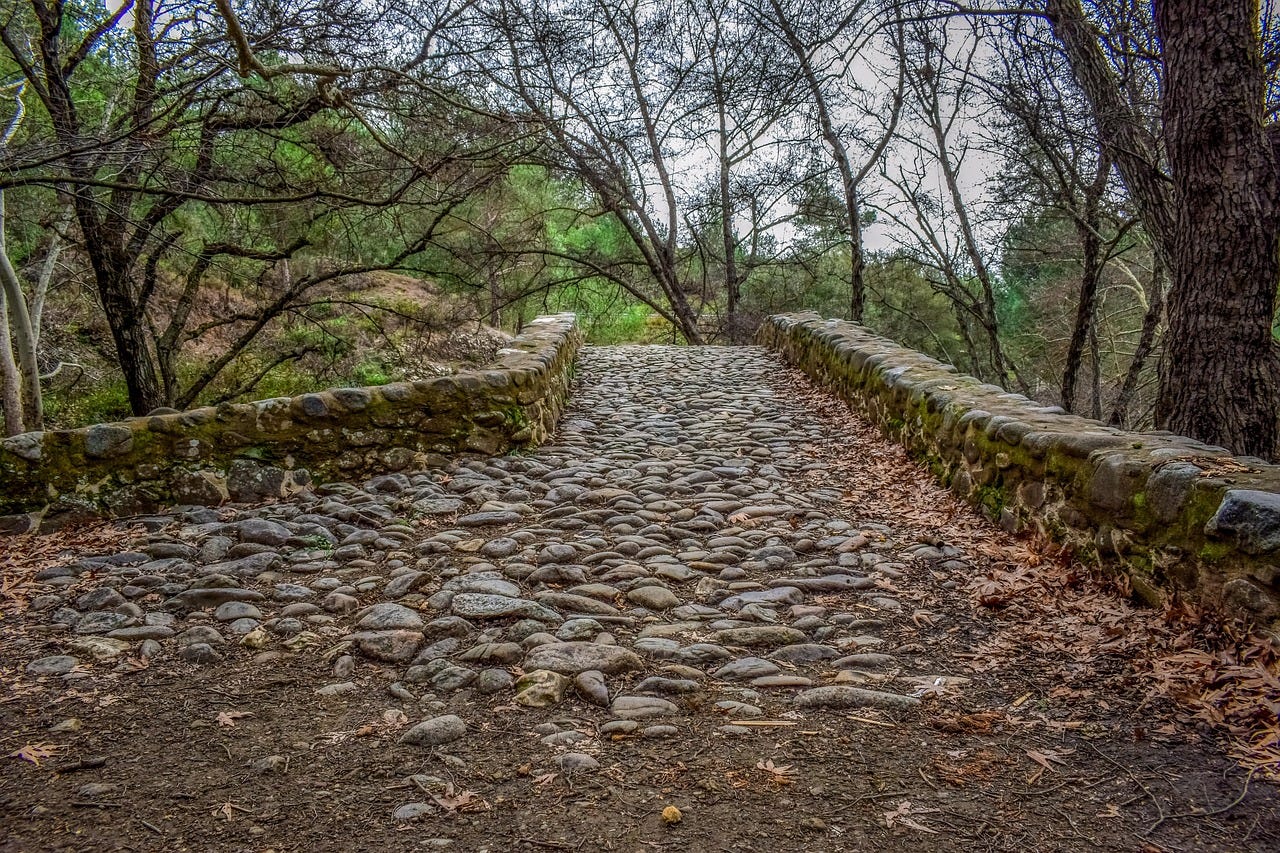
The “wise old woman” is not a character who appears fully formed. She begins, like all of us, unwise. She learns. She stumbles. She lives. It’s why wisdom is paired with age more often than not.
I have always been curious about the concept of wisdom and what made someone wise. I’m beginning to see now that knowing, understanding, and integration are part of a slow unfolding—and each takes its own time. I see a similarity as I experience the shifting landscape within myself.
For example, while I have understood certain things for years, it was time, filled with life experience, heartbreak and loss to season this knowledge in such a way that it might bloom into something more, something useful that could be applied across the entire landscape of my day to day life.
Knowing something isn’t the same as living it.
So what does it take to cross from one threshold to another—from knowing to living? From insight to embodiment? From seeing something clearly to allowing it to reshape our inner world and our behavior?
When I look back on my own life, I see that each step took its own time, often appearing only in glimpses long before I was able to live what I knew.
In college, I studied existentialism and encountered the idea of authenticity. It rang like a bell. This, I thought, is the way. Be real. Be honest. Share what is true. Allow others their truth. It fit neatly into the spirit of the times and into my own longing.
Living it, however, was something else entirely.
I did not yet understand how deeply shaped I had been by my family of origin—by experiences laid down long before I had language or choice. Still, the search took me where it needed to go: into theology, philosophy, psychology, spirituality. I was gathering tools without yet knowing how—or when—I would use them.
It was life itself that became my teacher.
At twenty-five, I pulled away from the idea of losing myself in a relationship. A few years later, I promised myself I would never again commit to something that did not feel true. At thirty, I entered a marriage that felt as real as real can be. And yet, neither of us was free of the invisible bindings of childhood.
The decades that followed were not a failure of that commitment, but its deepening. They became a long, painful, necessary unwrapping of my core self.
A turning point came when I began to write. In writing, I started to hear myself. The learning was fast and disorienting at first. I began to see that authenticity required alignment—that my inside and my outside had to speak to one another. Small but consequential changes followed.
That process has continued with every obstacle I have been willing to face rather than avoid. Each time I uncover what is and is not mine, I gain a clearer view not only of myself, but of others. I am able to see where I end and they begin.
This, I believe, is how wisdom is born—not through certainty, but through honest engagement with life as it is. Authenticity becomes the ground from which wisdom grows. It asks for courage. For a willingness to be unsparing in our self-examination. For the humility to learn from what hurts.
Wisdom does not come from running, or from borrowing the lives and insights of others, however inspiring they may be. It comes from the hard knocks we are willing to stay present to, and to use as teachers.
I don’t know that I would call this wisdom exactly. I only know that something shifts when we stop trying to outrun our lives and allow ourselves to be shaped by them.
I am still learning. Still uncovering what is mine and what is not. Still surprised by how much there is to see. If there is anything I trust now, it is not that I know more—but that staying honest, curious, and present continues to change me.
And for now, that feels like enough.